Every rower has had the same mid-piece conversation: something feels off, the boat is fighting back, and the harder you pull, the slower you seem to go. Technique is almost always the culprit, and it rarely fails in just one place. A rushed recovery makes the catch late. A late catch forces you to yank with the arms. Yanking makes the boat lurch, which makes you tense, which makes the next recovery worse. Technique is a chain, and slack in one link travels all the way down it.
What follows are the ten faults that show up most often in club boats, junior squads and on the erg, grouped by where they happen in the stroke. Fix causes, not symptoms. Change one thing at a time, and give it several sessions before you judge whether it worked.
The legs fire so fast that the seat travels several inches before the blade loads. It feels busy and athletic; the boat feels dead and heavy. Treat the first few inches of the leg drive as taking up slack, not sprinting. Cue: "press the stretcher, don't jump off it." A pause drill at three-quarters slide — hold for a beat, then drive — teaches your legs to wait for the load instead of racing it.
Stretching for extra length by rounding the back and diving the shoulders toward the stern. You gain nothing: the blade doesn't travel further, and you begin the drive from a weak position you have to unwind before you can apply real power. Sit tall and let the reach come from hip rotation, not from your nose heading forward. Accept the length your body actually has on the day.
A blade that skims the surface at the catch gives you a slapping, splashy sound and no load. The opposite error, jamming the blade deep, slows the boat and makes the finish feel like a wrench. Aim for the blade fully covered with the top edge just under the surface. Cue: "place it, then drive" and "row it in, not down."
The sequence is legs, then body, then arms, overlapping smoothly. The common fault has the shoulders swinging back before the legs finish, so the oar acts like a brake dug into the water and the hull checks. Feel the legs push, feel the body swing over the handle, then let the arms come through last.
Bent elbows early in the drive, the classic "rowing with your biceps." It feels strong in the first twenty strokes and useless by the last five hundred metres. Row legs-only with straight arms and the blades off the water, or square-blade with a light grip, and you will feel immediately how little the arms need to do.
White knuckles, forearms burning, blisters on the palm rather than the fingers. Hold the handle in the fingers with the thumb resting lightly on the end. A relaxed grip lets the handle find its own path through the drive and lets your shoulders stay loose. Cue: "cradle it, don't strangle it."
Lifting the hands at the finish buries the blade; dropping them washes it out and sends the bow bouncing. Keep the handle level as you draw, then tap down and away to extract, feathering as the hands move together. Tapping down before you feather is a favourite drill for a reason.
Laying back so far that your ribs jam and your elbows splay sideways, which makes the recovery long and slow. Sit tall through the finish with an open chest, using a moderate layback you can hold for a full race. If your lower back is doing the work, you have gone too far.
Many coaches teach the recovery taking roughly twice as long as the drive. When you race the seat forward, the boat is still running beneath you and you check its momentum at the catch. The fix is a sequence, not a speed: hands away quickly, body rocks over, then the slide rolls slowly. Cue: "quick hands, slow slide."
Curled over the handle with your eyes on the stern deck, you cannot balance a boat. Rock over from the hips rather than the waist, keep the spine long, the head level and the shoulders down. Pick a point on the horizon or the back of the rower in front and keep it there.
Most of these faults share a root: impatience, or tension. These drills attack both.
Run them at rate 18–20 for short pieces, and film yourself from the bank or from the side of the erg. What feels correct and what looks correct are often two different things.
Pick one fault. Not three. Work it for two weeks at low rates, where you have time to feel the correction, then test it at rate. Keep a notebook or a phone note with the cue that worked, because the cue that clicks for you is rarely the one that clicks for anyone else.
A coach's eye from the bank or a launch is worth more than any amount of guessing, so ask for one specific thing to work on next time you are on the water. And if something hurts — a lower back that aches for days, wrists, ribs — stop and have it looked at by a qualified coach and a medical professional before you row through it.
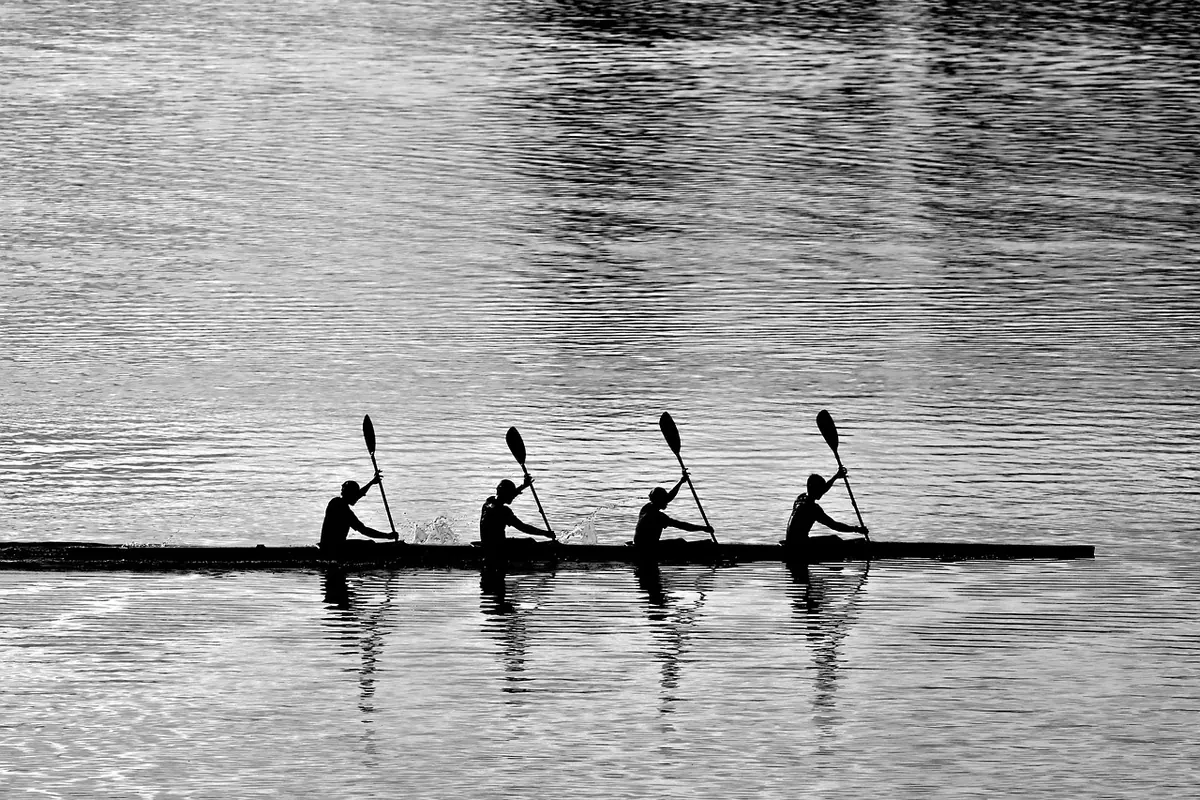
Photo: ignartonosbg / Pixabay